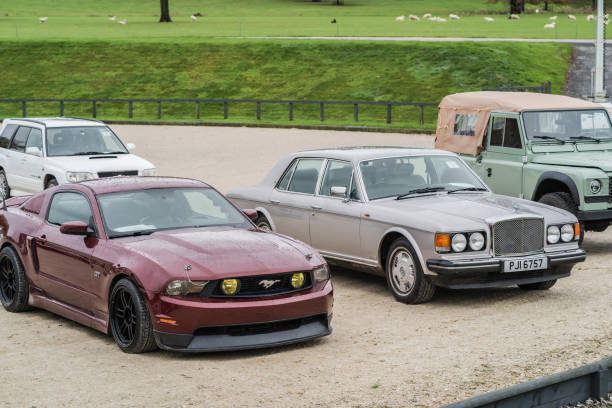

Cars have changed so much over the years that sometimes it feels unreal. If you compare the first automobiles with today’s hybrid and electric vehicles, the difference is like night and day. What started as noisy, slow-moving machines powered by simple engines has now turned into smart, fuel-efficient, and sometimes even self-driving vehicles. The journey from horsepower to hybrid power is not just about machines — it’s about human innovation, needs, and dreams.
The Early Days of Automobiles
The story of cars begins in the late 19th century. One of the earliest practical automobiles was developed by Karl Benz in 1885. His invention, often referred to as the Benz Patent-Motorwagen, was powered by an internal combustion engine. It looked more like a three-wheeled carriage than a car, but it marked the beginning of a revolution.
At that time, transportation mostly depended on horses, bicycles, or trains. Cars were seen as luxury items for the rich. They were expensive, unreliable, and required constant maintenance. Roads were not even designed for automobiles. Still, the idea of personal motorized transport slowly began to capture attention.
The Rise of Mass Production
The automobile industry truly transformed with the entry of Henry Ford. In 1908, Ford introduced the Ford Model T. What made it special was not just the design but the way it was produced. Ford implemented assembly line production, which reduced manufacturing time and cost.
Because of this innovation, cars became affordable for the middle class. Owning a car was no longer a dream limited to the wealthy. Roads improved, highways were built, and cities expanded. The automobile started shaping lifestyles, work culture, and even urban planning.
The Power and Speed Era
As the 20th century progressed, car manufacturers began focusing on power and performance. Bigger engines, higher horsepower, and faster speeds became the main attraction. Muscle cars became popular, especially in countries like the United States. Brands competed to produce vehicles with stronger engines and bold designs.
Cars were no longer just about transportation; they became symbols of status and freedom. Movies and pop culture glorified fast cars and road trips. However, during this period, little attention was paid to environmental impact. Fuel consumption was high, and emissions were largely ignored.
Oil Crisis and Environmental Awareness
The 1970s oil crisis changed everything. Fuel shortages and rising oil prices forced both manufacturers and consumers to rethink their choices. Smaller, more fuel-efficient cars became popular. Countries began introducing fuel economy standards.
At the same time, awareness about pollution and climate change started growing. Scientists and environmentalists warned about the harmful effects of vehicle emissions. Governments introduced stricter emission regulations, pushing car companies to innovate.
The Birth of Hybrid Technology
Hybrid technology was introduced as a solution that balanced performance and fuel efficiency. Instead of relying only on a petrol or diesel engine, hybrid cars combined an internal combustion engine with an electric motor. This reduced fuel consumption and emissions.
One of the most well-known early hybrid cars was the Toyota Prius, launched by Toyota in 1997. It became a symbol of eco-friendly driving. Although people were initially skeptical about hybrid technology, it gradually gained popularity.
Hybrids offered practical benefits — better mileage, lower emissions, and quieter operation. Over time, more companies joined the trend, making hybrid vehicles more accessible.
The Electric Revolution
While hybrids were a step forward, fully electric vehicles (EVs) represent a bigger shift. Unlike traditional cars, EVs run entirely on electricity and produce zero tailpipe emissions. Advances in battery technology have made EVs more efficient and capable of traveling longer distances.
Companies like Tesla played a major role in popularizing electric cars. Tesla proved that EVs could be stylish, fast, and high-performing. Suddenly, electric vehicles were not just about saving fuel — they were about innovation and future technology.
Governments around the world are now encouraging EV adoption through subsidies and stricter emission laws. Charging infrastructure is expanding, although it still needs improvement in many areas.
Smart and Connected Cars
Modern cars are not just about engines and fuel types. They are becoming smart machines equipped with advanced technology. Features like GPS navigation, touchscreens, driver-assist systems, and even semi-autonomous driving are becoming common.
Artificial intelligence and sensors are helping cars detect obstacles, maintain lane discipline, and avoid collisions. Some vehicles can even park themselves. The automobile has evolved into a tech gadget on wheels.
Challenges and the Road Ahead
Despite rapid progress, challenges remain. Electric vehicles still face issues like high initial cost and limited charging infrastructure in some regions. Battery production also raises environmental concerns.
However, research is ongoing in areas like solid-state batteries, hydrogen fuel cells, and fully autonomous driving. The goal is to make transportation cleaner, safer, and more efficient.
The future might include cars that communicate with each other to prevent accidents or vehicles powered entirely by renewable energy. The concept of car ownership itself might change with the rise of shared mobility and ride-hailing services.
Conclusion
From the early inventions of Karl Benz to the mass production revolution of Henry Ford, and from powerful muscle cars to eco-friendly hybrids and electric vehicles, the journey of automobiles has been remarkable. Cars have evolved from simple machines replacing horses to complex systems powered by electricity and intelligent software.
The shift from horsepower to hybrid power reflects more than just technological advancement. It shows how society adapts to challenges — whether it is fuel scarcity, environmental concerns, or the need for efficiency. As innovation continues, the evolution of cars is far from over. The next chapter might be even more exciting than the last.