
The driveway is one of the busiest parts of a property, yet homeowners often give it little thought until cracks, puddles, or parking problems appear. Replacing an outdated driveway opens up several possibilities beyond another plain concrete surface. Different layouts, finishes, and construction methods can improve how the driveway looks, handles vehicle traffic, and fits the property.
A Traditional Concrete Driveway Still Has Plenty to Offer
Plain poured concrete remains a practical choice for residential driveways because it creates a continuous, stable surface for everyday vehicle use. A properly installed slab can handle regular traffic without the loose stones associated with gravel driveways. Broom finishing adds traction, making the surface easier to walk across during wet weather.
Installation quality determines how well the driveway performs over time. Contractors must account for soil compaction, slab thickness, drainage, and control joints before finishing the surface. Homeowners comparing concrete companies near me should look beyond the initial price and ask what preparation the estimate includes.
Stamped Concrete Can Give an Ordinary Driveway More Character
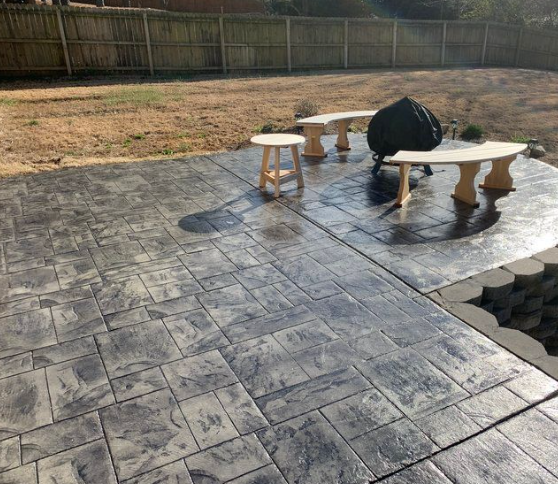
Stamped concrete allows a driveway to resemble slate, cobblestone, brick, or other textured materials. Crews press patterned tools into freshly placed concrete, creating decorative impressions before the slab hardens. Color treatments can add depth and make the pattern resemble natural materials more closely.
Unlike individual brick pavers, stamped concrete forms part of a continuous slab rather than a collection of separate units. However, the surface still needs properly placed control joints. Skilled concrete companies can recommend patterns that complement the house without making a large driveway look overly busy. Textured finishes and suitable sealing products also deserve attention because vehicle traction matters as much as appearance.
Is Exposed Aggregate a Good Option for Residential Driveways?
Exposed aggregate offers a different appearance by revealing decorative stones within the concrete surface. Workers remove a controlled amount of cement paste while the material is still young, leaving the aggregate visible. The finished driveway can feature natural stone colors and a textured surface that blends well with surrounding landscaping.
Stone selection affects both appearance and comfort. Smaller aggregate generally creates a more refined texture, while larger stones produce a bolder finish. Contractors must control the exposure depth to keep the stones properly embedded. Homeowners searching for residential concrete contractors near me can request samples showing different aggregate sizes and sealing options before selecting a finish.
Decorative Borders Can Improve a Driveway Without Changing Its Entire Surface
A driveway doesn’t need decorative patterns across every square foot to look different. Contrasting borders can frame a plain concrete surface, highlight the entrance, or separate parking spaces from nearby walkways. Stamped brick patterns and colored concrete bands are common design choices.
Border placement needs careful planning because decorative sections still support vehicle loads. Contractors should maintain suitable slab thickness and account for joints where different sections meet. Narrow borders often work better than oversized designs that reduce the visual space around the driveway. The result can complement nearby patios, landscaping, and exterior masonry.
Choosing the Right Driveway Layout for Parking and Vehicle Access
Driveway shape influences how comfortably homeowners can enter, park, and leave their properties. Straight layouts suit narrow lots, while wider driveways may accommodate additional vehicles or provide easier access to a two-car garage. Circular designs can reduce the need for reversing onto busy roads where property dimensions allow.
Turning space, garage door clearance, and local setback requirements all affect the design. Residents searching for cement contractors near me should ask whether potential installers can assess vehicle movement before construction. A driveway that looks attractive on paper may become inconvenient if larger vehicles cannot turn without crossing landscaped areas.
Proper Drainage Makes a Bigger Difference Than the Finish
Even an attractive driveway becomes frustrating when rainwater collects near the garage or runs toward the foundation. Contractors establish surface elevations during excavation and formwork, giving water a suitable direction to travel. Nearby sidewalks, planting beds, and drainage structures influence the final slope.
Huntsville properties can experience heavy rainfall, making runoff management an important part of driveway planning. Experienced concrete contractors in Huntsville AL can assess whether grading adjustments, channel drains, or other drainage features are appropriate. Decorative finishes cannot compensate for poor drainage, so these details need attention before the concrete arrives.
Concrete Driveway Extensions for Homes That Need More Parking
Additional household vehicles can make an existing driveway feel too narrow. Extending the pavement beside the original slab may provide another parking space without replacing the entire driveway. Contractors first need to check property boundaries, available yard space, and the condition of the existing concrete.
Connecting new pavement to an older slab requires attention because the two sections may settle or move differently. Matching the original color can also be difficult due to weathering. For homeowners considering driveway extensions, decorative finishes, or complete replacements, Legacy Outdoor Services offers professional concrete installation in Huntsville and surrounding communities. The company can help plan driveway improvements that accommodate everyday parking needs while considering the property’s layout, drainage, and desired appearance