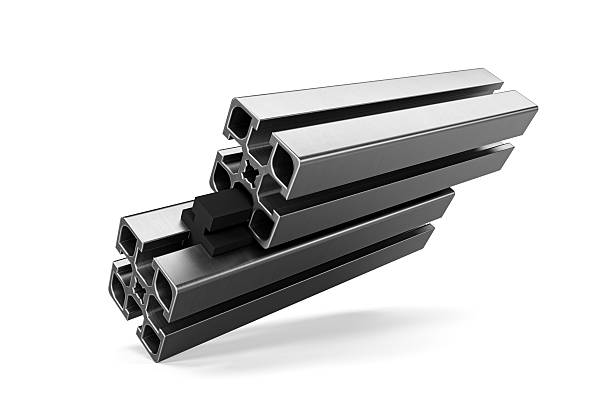

Equipment moves, automation expands, and production demands shift faster than many facilities were originally designed to accommodate. Modern manufacturers increasingly rely on modular structural systems because flexibility has become just as valuable as production capacity. An aluminum framing kit built from adaptable components allows facilities to reconfigure work areas, integrate automation, and support future growth without the limitations of permanent welded structures.
Automated Conveyor System Modules
Conveyor systems form the backbone of many smart factories, but the supporting structures behind them often determine how easily a production line can evolve. Automated conveyor modules built with MiniTec Aluminum Framing provide manufacturers with a practical way to add, extend, or modify transport systems as production requirements change. Unlike traditional fabricated steel frames, modular systems can be adjusted without extensive cutting, welding, or downtime.
Production managers often appreciate how MiniTec extruded aluminum framing supports rapid equipment integration while maintaining structural integrity. Additional sensors, diverters, inspection stations, and robotic interfaces can be incorporated directly into the framework. That flexibility allows facilities to respond quickly to changing workflows without rebuilding entire conveyor support structures.
Linear Motion Tracking Rails
Precision movement plays a major role in automated manufacturing environments. Linear motion tracking rails frequently support inspection systems, robotic assemblies, material positioning equipment, and automated transfer mechanisms. Smart factory layouts benefit from framing systems that provide accurate alignment while remaining easy to adjust during future upgrades.
Engineers commonly utilize extruded aluminum T slot profiles because they simplify mounting, positioning, and alignment tasks. Integrated channels within the T slot extrusion system allow components to be repositioned without damaging the framework. Facilities gain the ability to fine-tune production equipment while maintaining the accuracy required for modern automated processes.
Pneumatic Pick-and-Place Frames
Automated pick-and-place systems handle everything from packaging operations to electronic component assembly. Supporting structures must remain rigid enough for repetitive motion while offering access for maintenance and future modifications. Pneumatic automation cells often require a framework capable of accommodating valves, air lines, controls, and robotic devices simultaneously.
Lightweight yet durable aluminum framing material provides an ideal foundation for these systems. Modular frame construction allows manufacturers to expand automation zones, relocate equipment, or integrate additional robotic functions without replacing existing infrastructure. As production demands increase, facilities can scale operations while maintaining consistent system performance.
Integrated Wire Management Race Ways
Cables, communication lines, and power distribution systems often become overlooked challenges inside growing production facilities. Poor wire routing creates maintenance difficulties, increases troubleshooting time, and can interfere with safe operations. Smart factories depend on organized cable management to support increasingly complex automation networks.
Integrated raceway systems built into T slot aluminum extrusion structures provide a cleaner solution than external conduit installations. Hidden pathways protect wiring while improving accessibility for maintenance personnel. Organized cable routing also enhances system appearance and helps reduce accidental damage caused by moving equipment or routine production activities.
Ergonomic Assembly Workstation Accessories
Employee comfort directly influences productivity, accuracy, and workplace satisfaction. Assembly stations designed around ergonomic principles help reduce repetitive strain while improving workflow efficiency. Modern workstations frequently incorporate adjustable shelving, monitor mounts, tool positioning systems, and material presentation racks tailored to specific tasks.
Modular aluminum framing kit configurations allow manufacturers to customize workstations around employee needs rather than forcing workers to adapt to fixed equipment layouts. Height adjustments, equipment repositioning, and future modifications become significantly easier. As manufacturing methods evolve, workstation designs can evolve alongside them without requiring complete replacement.
Sensor and Electrical Enclosure Brackets
Industrial automation depends heavily on sensors, cameras, control devices, and monitoring equipment. Proper placement of these components directly affects production accuracy, quality control, and machine communication. Mounting systems must remain stable while supporting future upgrades and changing equipment requirements.
Flexible bracket solutions built from MiniTec Aluminum Framing simplify installation and adjustment processes. Electrical enclosures, vision systems, barcode scanners, and safety devices can be mounted directly to the structural framework. Modular attachment points allow technicians to relocate components as operational needs change, helping facilities maintain efficient production environments.
Heavy-Duty Floor Hardware Stands
Manufacturing facilities often require sturdy support structures for control panels, operator stations, testing equipment, and production hardware. These stands must withstand daily use while remaining adaptable enough to accommodate equipment upgrades over time. Fixed steel structures frequently create limitations once production layouts begin changing.
Robust framing systems constructed from aluminum framing material provide a balance between strength and adaptability. Equipment stands can be relocated, expanded, or modified with minimal disruption. Facilities gain greater flexibility when introducing new technologies, improving workflows, or reconfiguring production areas to support evolving manufacturing objectives.
Rolling Door Protective Enclosures
Automated production cells frequently utilize protective barriers to separate equipment from employee work zones. Rolling door enclosures provide controlled access while maintaining safety requirements around robotics, conveyors, and automated machinery. Effective enclosure systems must balance accessibility, visibility, and protection.
Safety-focused structures built using MiniTec extruded aluminum framing allow manufacturers to create custom protective systems without sacrificing flexibility. Transparent panels, safety interlocks, access doors, and machine guarding components integrate easily into the framework. Organizations seeking scalable manufacturing solutions often rely on providers such as Minitec Solutions to develop modular structures that support automation growth while helping facilities maintain efficient and adaptable smart factory layouts.