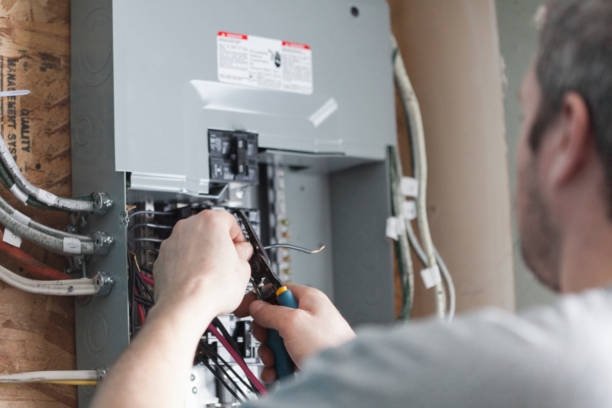

A new home is an opportunity to get the electrical system right from the start — something that is much easier and less expensive than trying to fix or expand a system that was undersized or poorly laid out when it was originally installed. A renovation that touches the walls is an opportunity to add circuits, improve the panel, and address any wiring that did not meet current standards — work that would otherwise require opening those walls up again later.
Professional electrical installation service is not just about connecting wires correctly. It is about designing the system intelligently — sizing the service for current and foreseeable future loads, laying out circuits to avoid overloading and to maintain selective coordination, and placing outlets, switches, and fixtures where they will actually serve the people using the space.
New Construction Electrical from Rough-In to Trim
New construction electrical work moves through distinct phases. The rough-in phase happens after framing and before insulation and drywall — the electrician runs the conduit or cable, installs the boxes for outlets, switches, and fixtures, and sets up the panel. This is the phase where the layout decisions that will affect the home for decades get made. Where the outlets are placed in every room. How many circuits serve the kitchen. Whether the garage gets a 240-volt circuit for a future EV charger. How the panel is configured for the home’s current load and future expansion.
After rough-in inspection, insulation and drywall close up the walls and ceilings, and the trim phase begins — installing the devices, covers, and fixtures that make the electrical system visible and usable. Trim requires careful attention to detail: devices set level, covers fitting flush, fixtures mounted cleanly, and everything tested before the homeowner takes possession.
Whole-Home Rewiring: When It Is Necessary
Some older Southaven homes need more than panel upgrades — they need the wiring itself replaced. Knob-and-tube wiring, which is ungrounded and lacks the overcurrent protection of modern wiring methods, is a genuine hazard when it is deteriorated or has been improperly modified over the decades. Aluminum branch circuit wiring from the late sixties and seventies carries specific fire risks at connection points. Wiring that has been damaged by pests, moisture, or mechanical impact needs to be replaced.
Whole-home rewiring is a significant project that is most cost-effective when combined with other renovations that open up the walls. Done on its own, it requires careful work to run new wiring with minimal intrusion — fishing wire through finished walls, using existing pathways where possible, and patching after the electrical work is complete. An experienced installer minimizes the wall damage and completes the work in a staged way that maintains power to the home throughout the process.
Upgrading for Modern Electrical Demands
Homes built before the turn of the century were not designed for today’s electrical demands. Home offices with multiple monitors and docking stations, kitchen appliances that run simultaneously, EV chargers that draw significant sustained current, and smart home systems that add small loads across many circuits — these are the everyday demands of a modern household. A professional electrical installation service that assesses the current system and designs the upgrades to support those demands gives homeowners an electrical infrastructure that works for how they actually live, rather than a system that is perpetually straining to keep up.